10 Must-Have Marine Safety Equipment for Luxury Yacht Owners
Published February 10, 2026
Luxury yachting promises freedom, but the ocean doesn’t care about price tags. One overlooked detail, marine safety equipment, can turn a dream voyage into a crisis faster than a sudden squall.
Most yacht owners assume they’re covered, yet many don’t actually carry the required marine safety equipment for offshore cruising. What if the real luxury isn’t marble decks, but absolute preparedness?
In this guide, we break down the must-have gear that protects lives, assets, and peace of mind, straight from trusted marine safety equipment suppliers and real-world scenarios. Because when things go wrong at sea, there’s no room for improvisation, only preparation matters.
1. Automatic Fire Suppression Systems
A fire on a yacht can be very dangerous and happen quickly. Automatic fire suppression systems can find heat or smoke early and spray fire-fighting chemicals to stop the fire. Important areas like the engine, kitchen, and fuel storage need this protection.
Many yacht owners think a hand-held fire extinguisher is enough, but fires can spread too fast for people to act. These automatic systems work faster than humans. Checking and keeping them in good condition helps keep everyone safe on board.
Working with marine safety equipment suppliers makes sure your yacht has the right fire safety system.
2. Advanced Navigation Technology
Safe navigation is more than charts and compasses. Modern yachts use GPS, radar, AIS, and depth sounders to monitor hazards and plot precise courses. These systems reduce the risk of collisions, running aground, or venturing into dangerous waters.
For luxury yacht owners, advanced navigation technology isn’t optional, it’s essential for peace of mind. Imagine cruising in unfamiliar waters with real-time updates on other vessels and obstacles, technology becomes your unseen crew member.
Investing in sophisticated marine safety equipment ensures that every voyage is both efficient and secure, protecting both passengers and your high-value vessel.
3. EPIRBs and Personal Locator Beacons
Emergencies can strike far from shore, and being located quickly can save lives. EPIRBs (Emergency Position-Indicating Radio Beacons) and personal locator beacons transmit your exact location via satellite to rescue teams.
For yacht owners, these devices are the ultimate safety net, especially during offshore trips where cell coverage fails. Modern units are compact, easy to deploy, and incredibly reliable. Even experienced captains understand that preparedness outweighs confidence in skill alone.
Using required marine safety equipment like EPIRBs ensures rapid response, giving you and your passengers a critical advantage when every minute counts.
4. Life Rafts and Life Jackets
There is nothing like a well-armed life raft and enough life jackets to ensure that everyone is safe on board that screams safety first. New Life Rafts come with survival kits and food, water and first aid tools. Jackets are made to be comfortable and buoyant and visible.
A lot of yacht owners do not take care about regular inspection as when some malfunctions happen, the owners may not be able to resist the disaster. Having these is not only required by the law, but it is a life saving point.
The most expensive yacht is still no match in the rough water and with good flotation devices, everyone is given a chance to fight. Reliable marine safety equipment vendors provide the new designs in order to make the most of the safety and usability.
5. Man Overboard Detection Systems
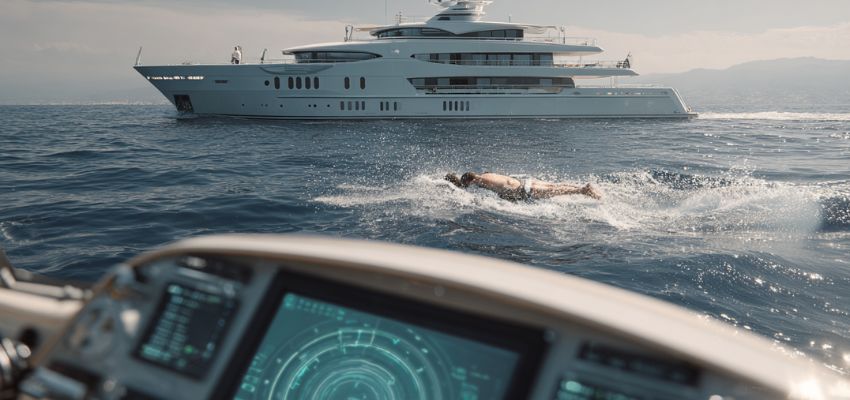
Someone can fall off a yacht very quickly. Modern man overboard (MOB) systems can make an alarm and show the person’s location to the crew. Some use wearable sensors so help comes fast and everyone stays calm.
Some systems connect to the yacht’s navigation screens to show the best way to rescue the person. These tools help keep people safe and give yacht owners peace of mind. Choosing marine safety equipment with MOB systems helps the crew be ready for emergencies and keeps everyone safer on the water.
6. Bilge Pumps and Water Alarms
One of the most threatening factors that can happen to a yacht is water intrusion. Bilge pumps of high capacity are effective in eliminating the water, whereas water detecting alarms in the system give early signals.
High-tech systems will be activated whenever there is a critical water level and provide minimal damages. Small leaks are something that is underestimated by the yacht owners and may turn out to be catastrophic within a short period.
These systems ensure that the investment and the people on board are safe with proper maintenance. The cooperation with trusted suppliers of marine safety equipment is a guarantee that pumps and alarms are of high quality and your yacht can still stay afloat under a bad weather, not losing hope about any journey.
7. Anti-Collision Systems
Even a luxury yacht experience can be destroyed within a few seconds because of collisions at sea. Anti-collision systems are radar, AIS, and sonar to detect the presence of an obstacle or a close ship, and warn the captain instantly.
Others are built in with autopilot to modify the course automatically, a second safeguard. This technology is useful to even the most seasoned navigators as it counters the risk of human error in night voyages, fog or crowded open roads.
To the owners of the yacht, it is not only prudent to invest in the anti-collision marine safety equipment, but it is a necessity. Technology and foresight are effective in ensuring safety at sea by avoiding unnecessary calamities.
8. Engine Monitoring Systems
An unexpected engine failure can leave you stranded, far from help. Engine monitoring systems track critical metrics like temperature, oil pressure, and fuel levels in real time, alerting the crew to issues before they become emergencies.
Luxury yachts often operate far offshore, making preventive alerts vital. These systems enhance both performance and safety, reducing the risk of breakdowns that could jeopardize passengers and cargo.
When selecting marine safety equipment, engine monitoring tools should be a top priority. They turn uncertainty into control, letting yacht owners enjoy the journey with peace of mind.
9. Connectivity and Communication Systems
It is not just a fun thing to remain connected on a yacht, but it will keep everyone safe. Wi-Fi, VHF radios and Bluetooth devices assist the crew to receive weather updates, emergency alerts and navigation information fast.
The communication systems are also good to enable the captain to communicate with the crew, other boats nearby, or the rescue teams in case of an emergency. Minor delays on the sea can lead to huge issues.
Communication using the appropriate marine safety gear ensures that help is available whenever needed. By cooperating with reputable marine safety products vendors, your yacht will be provided with powerful and efficient equipment to ensure that every journey is safer and more comfortable.
10. First Aid and Emergency Medical Kits
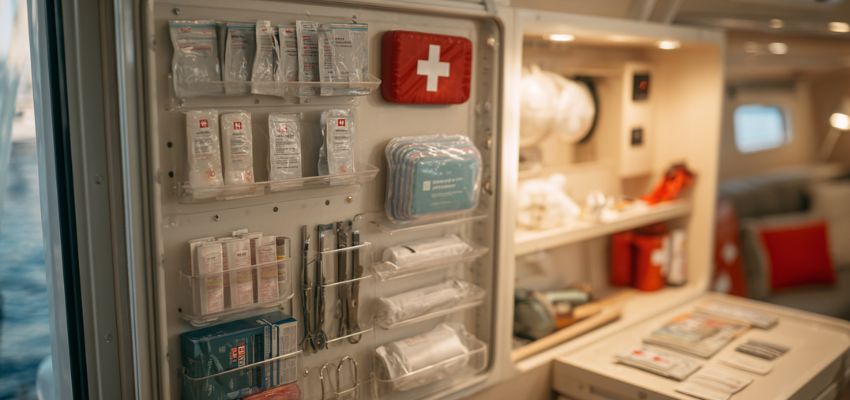
In a yacht, accidents may occur at any time. The cut, bump, seasickness, or any other issue can be assisted with a first aid kit. There are also yachts that are equipped with oxygen tanks or defibrillators in case of larger emergencies.
Even minor wounds may turn into major ones when no one is able to assist immediately. It is to ensure that all on the board are safe by keeping the kit full and ready. Working with suppliers of marine safety equipments will aid in acquiring the correct medical equipment of your yacht.
This makes your crew and guests protected in every voyage.
FAQs About Marine Safety Equipment
What is the 10 rule for yachts?
The 10 rule implies that a yacht should have sufficient safety equipment, which must serve 10 individuals. This involves life jackets, a raft and fire safety equipment. It assists in ensuring that all people are safe during an emergency.
What is the 12-person yacht rule?
It is the 12-person rule that states that the number of people that can safely be on a yacht is 12. The yacht should be equipped with sufficient mandated marine safety gear to all the occupants. This makes journeys lawful and secure.
What are the 11 personal protective equipment onboard ships?
The 11 personal protective equipment (PPE) are safety items like life jackets, helmets, gloves, boots, harnesses, goggles, and vests. They protect people from accidents at sea. All yachts should have these from trusted marine safety equipment suppliers.
What is the 24m rule for yachts?
The 24m rule means yachts longer than 24 meters need extra safety gear. This includes life rafts, fire systems, and alarms. It keeps large yachts safe for all passengers.
What is the barefoot rule on a yacht?
The barefoot rule asks passengers to remove their shoes on deck. This prevents slips and keeps the yacht clean. It’s a simple way to stay safe while onboard.
Final Thoughts
Staying safe on a yacht is very important. Having the right marine safety equipment can protect you, your family, and your crew in an emergency. From life jackets and rafts to fire systems and alarms, every item helps keep everyone safe.
Working with trusted marine safety equipment suppliers ensures your yacht has the best gear. Even small yachts need the right tools, and big yachts need extra safety items. Being prepared makes every trip more fun and worry-free.
At Luxury Retreat Group, we provide yachts with all the safety equipment you need for a safe and enjoyable adventure on the water.
Book Yacht Charters With Luxury Retreat Group
Looking for a great time on the water in South Florida? Luxury Retreat Group is now available for one-of-a-kind yacht charters in Boca Raton and beyond. Book our yachts for parties, romantic yacht dinner cruises, and more.
Fact Checked By Experts
Our team of experts has fact-checked this article. Explore the editorial standards to learn more about our commitment to factual accuracy.

About The Author
Rei Bayucca is a professional writer who loves yachting in South Florida’s tropical weather. She writes engaging and insightful articles that captivate and educate readers.